
Egg Ration in the Spanish Military Hospital
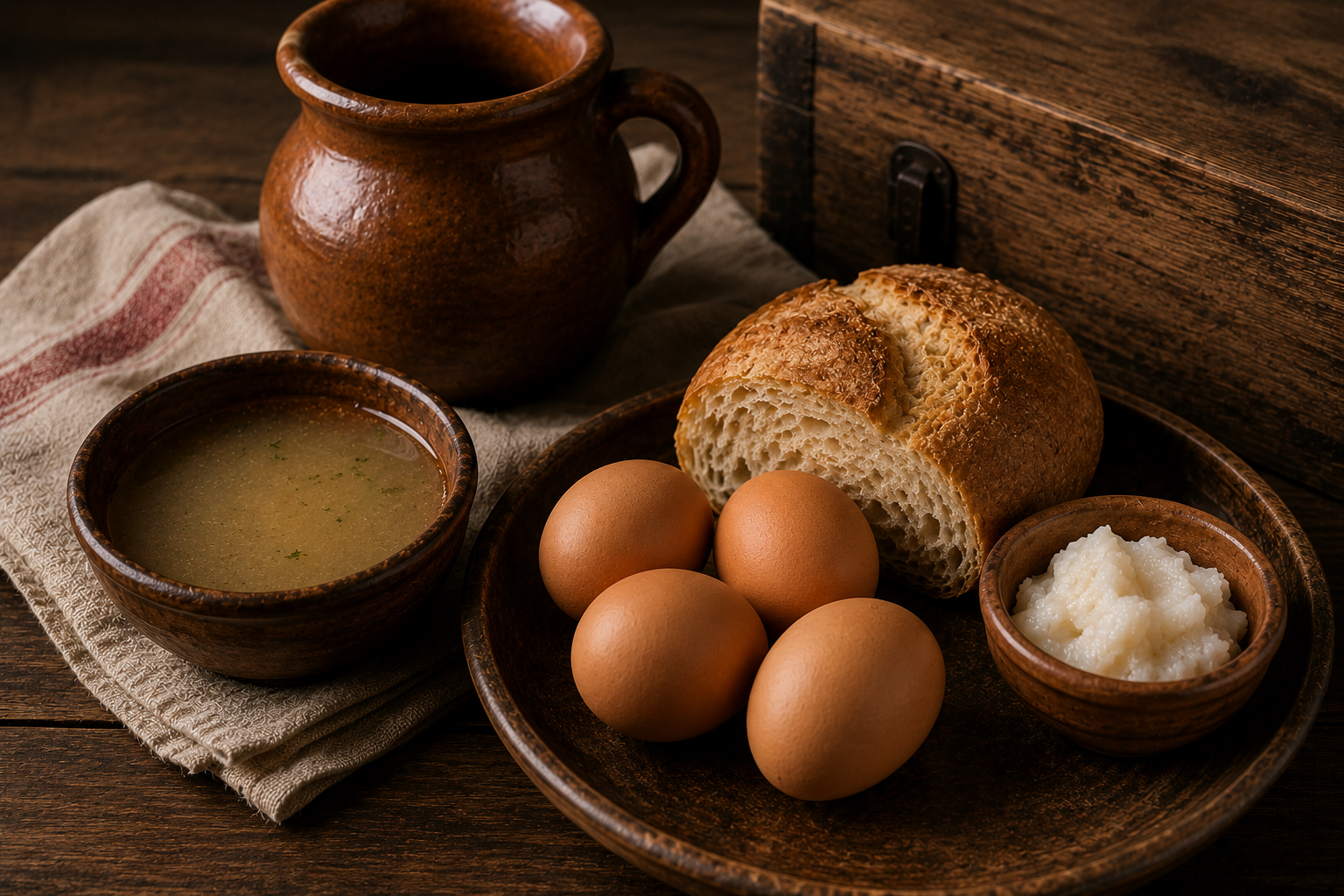
The Egg Ration was a lighter hospital diet made with eggs, bread, pork lard, and broth from the common pot. Compared with heavier meat-based rations, this meal offered nourishment in a simpler form.
This ration shows how the Spanish Military Hospital adjusted meals based on patient needs, using familiar ingredients that could be divided across breakfast, dinner, and supper.
A Lighter Hospital Meal
The Egg Ration relied on eggs and bread rather than large portions of meat. Patients receiving this ration were also served broth at midday and supper, adding warmth and nourishment to the meal.
What Was Included
The Egg Ration included four eggs, fourteen ounces of bread, and one-half ounce of pork lard. Broth from the common pot was also served with the ration during the day.
How It Was Served
The lard and two ounces of bread were used to make breakfast soup. Two eggs and six ounces of bread were served for dinner, while the remaining eggs and bread were reserved for supper.
Breakfast Soup
As with many hospital diets, the day began with soup. Bread and pork lard were used to prepare a simple breakfast soup before the egg portions were served later.
Dinner and Supper
Eggs and bread were divided between dinner and supper. The regulations also specified that patients receiving this ration should receive a cup of broth from the common pot at both midday and supper.
Historical Note
The Egg Ration illustrates how hospital meals could be adjusted to provide a lighter source of nourishment. Eggs, bread, and broth offered a simpler alternative to heavier meat rations while still following the hospital’s careful system of measured portions.
Continue Exploring Hospital Diets
Learn more about the foods and rations used in colonial hospital care.
Experience Colonial Medicine in St. Augustine
Visit the Spanish Military Hospital Museum to learn more about 18th-century medical practices, apothecary traditions, and daily hospital life in Spanish Colonial Florida.