When Summer Was Dangerous: Illness and Healing in Colonial St. Augustine
August 6, 2025
Bloodletting, Leeches, and Belief: Medicine Before Modern Science in Colonial St. Augustine
October 7, 2025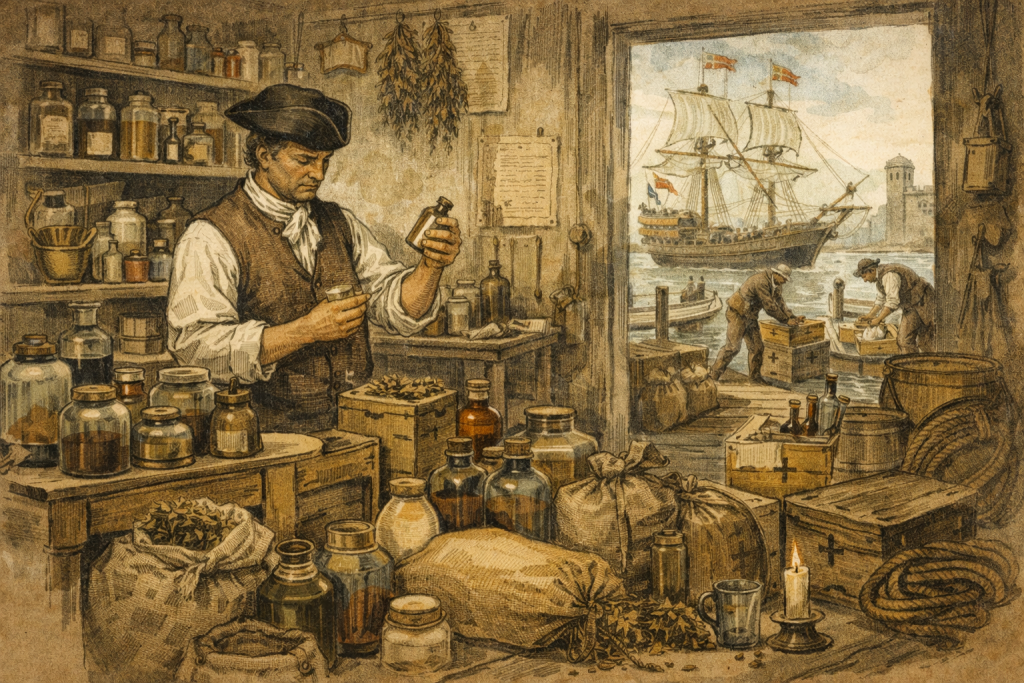
In colonial St. Augustine, medicine did not arrive neatly packaged or reliably stocked. Apothecaries depended on ships, trade routes, seasonal deliveries, and local improvisation to keep their shelves supplied. Every bottle, jar, and bundle of dried ingredients reflected a delicate balance between what could be imported and what had to be found—or substituted—locally.
This reality shaped daily medical care in one of the oldest European settlements in North America. Today, visitors can explore how this system functioned by stepping inside the Spanish Military Hospital Museum, where preserved spaces help illustrate the challenges of maintaining healthcare in a remote colonial outpost.
A Port City Dependent on Supply Lines
As a Spanish colonial port, St. Augustine was connected to a broader network of Atlantic trade. Ships brought soldiers, supplies, and medical materials from Spain, the Caribbean, and other colonial outposts. Apothecaries relied heavily on these deliveries for ingredients considered essential to European medical practice.
However, supply lines were unpredictable. Storms, shipwrecks, warfare, and political tensions could delay or prevent shipments entirely. When supplies ran low, apothecaries had no choice but to adapt—stretching ingredients, altering recipes, or turning to locally available alternatives.
What Apothecaries Tried to Keep on Their Shelves
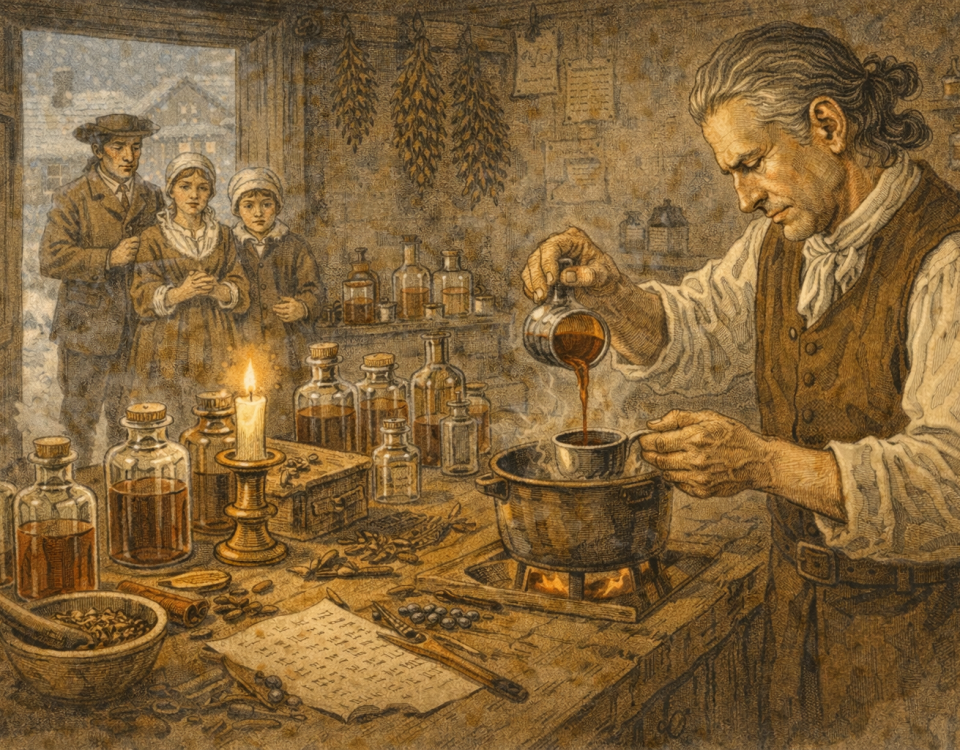
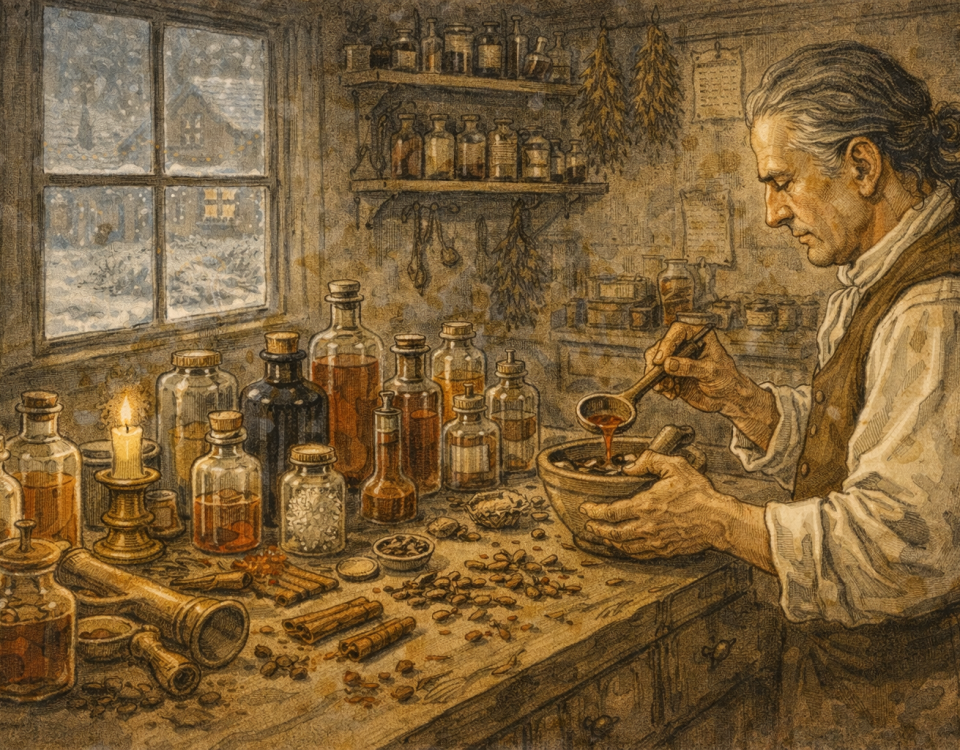
A colonial apothecary’s inventory was both practical and strategic. Common supplies included dried herbs, resins, spices, oils, and alcohol for tinctures. Some ingredients were valued for their medicinal properties, while others were prized for their ability to preserve remedies in a hot, humid climate.
Containers mattered just as much as contents. Glass bottles, ceramic jars, and tightly sealed vessels helped protect medicines from moisture, pests, and spoilage. Managing inventory was an ongoing challenge—especially during summer months, when heat accelerated deterioration.
When Ships Didn’t Arrive
Periods of shortage forced apothecaries to rely on experience rather than instruction. Remedies that depended on imported ingredients might be modified using local plants or prepared in smaller quantities to conserve supplies.
This flexibility was essential in St. Augustine, where isolation could turn minor illnesses into serious threats. Medical care was not standardized; it was responsive, shaped by availability and necessity rather than strict formulas.
Local Knowledge Filled the Gaps
When imported supplies were scarce, apothecaries often turned to local knowledge. Indigenous plant use and African healing traditions provided alternatives that helped bridge shortages. Over time, these practices became integrated into daily care, creating a medical system adapted to Florida’s environment.
This blending of traditions reflects a broader truth about colonial life: survival depended on cooperation and shared knowledge. Medicine in St. Augustine was not static—it evolved with every challenge.
Trade, Travel, and the Story of St. Augustine
Understanding how medicine was supplied offers insight into St. Augustine itself. The city was never isolated; it was shaped by movement—of ships, goods, people, and ideas. Medical trade followed the same routes as food, tools, and everyday necessities.
For those exploring St. Augustine today, this perspective adds depth to the experience. Historic buildings are not just architectural landmarks—they are evidence of a city sustained by constant exchange.
Additional background on the city’s colonial development can be found through the City of St. Augustine’s history resources.
Seeing the Supply Story Inside the Hospital
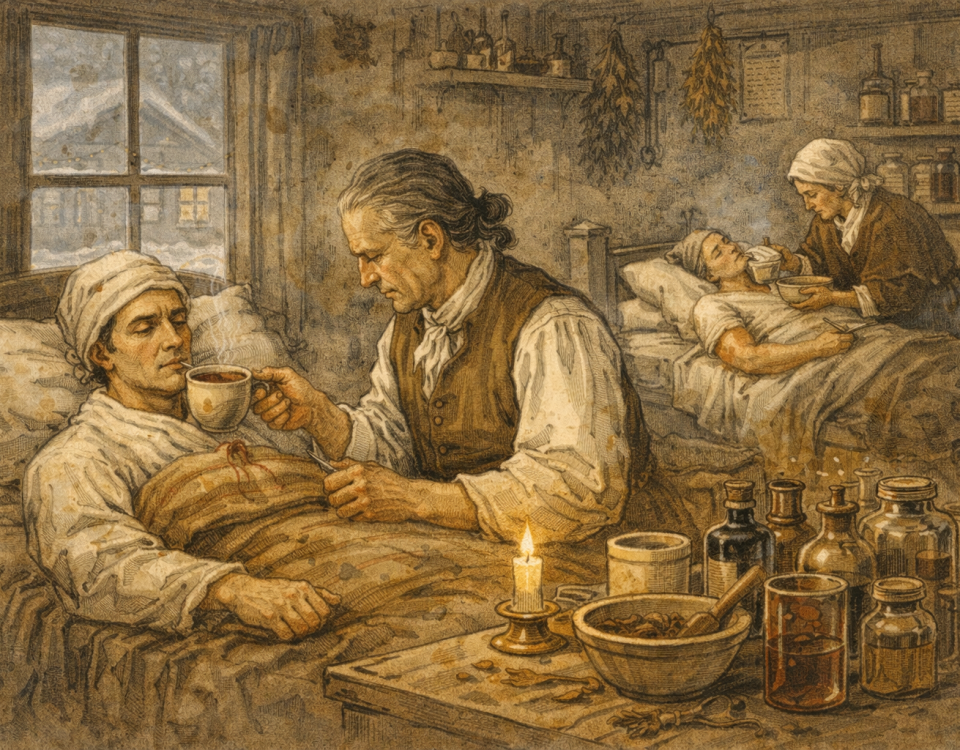
The preserved spaces of the Spanish Military Hospital help bring this story to life. Storage areas, preparation rooms, and treatment spaces reveal how closely medical care was tied to supply management. Every remedy represented planning, adaptation, and resilience.
If you’re planning time in the historic district, you can learn more about the experience on the Tours page and find helpful details on Plan Your Visit. The hospital fits naturally into a day spent walking St. Augustine’s historic streets.
Medicine as a Measure of Survival
In colonial St. Augustine, medicine was never guaranteed. Apothecaries worked within an uncertain system, shaped by weather, trade, and human ingenuity. Their ability to adapt—using whatever resources were available—played a critical role in the survival of the city.
Explore more stories like this in The Apothecary’s Journal.