
Ration of Meatballs in the Spanish Military Hospital
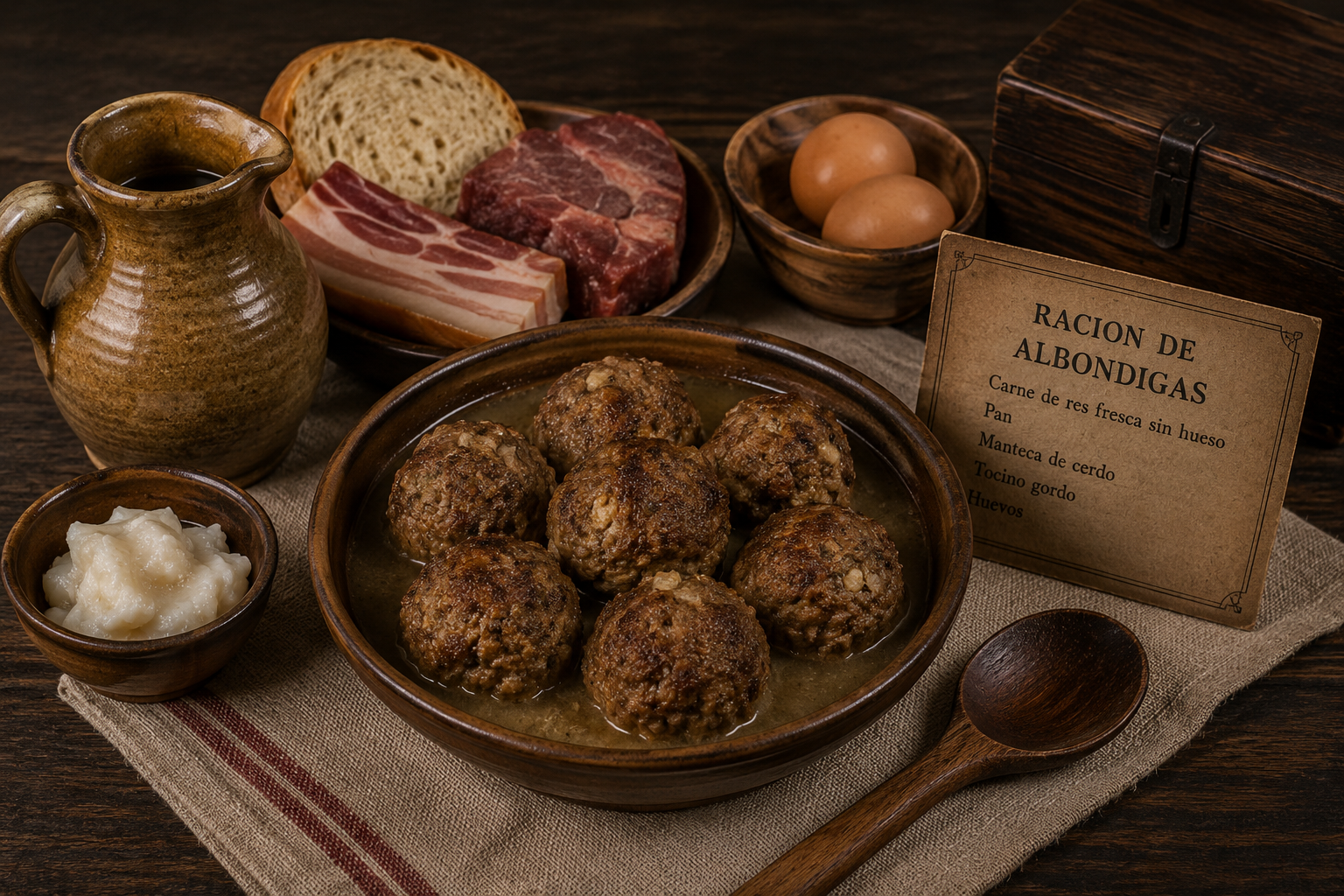
The Ration of Meatballs was a prepared hospital meal made from fresh beef, bread, pork lard, fat bacon, and eggs. This ration shows how simple ingredients could be combined into a more structured meal for patients.
Like other hospital rations, the ingredients were carefully measured and divided between breakfast, dinner, and supper according to the regulations.
A Prepared Meat Ration
The Ration of Meatballs transformed beef, bacon, and eggs into a prepared dish that could be served in portions. It reflects the hospital’s organized approach to both nourishment and meal preparation.
What Was Included
The Ration of Meatballs included fresh beef without bone, bread, pork lard, fat bacon, and eggs. These ingredients provided protein, fat, and bread in a form that could be prepared and portioned for hospital meals.
How It Was Served
Bread and pork lard were used for the breakfast soup. The beef, bacon, eggs, and bread were then divided between dinner and supper to create measured servings of meatballs for the patient.
Breakfast Soup
The day began with breakfast soup made from bread and pork lard. This followed the same structured pattern seen throughout many of the hospital’s ration regulations.
Dinner and Supper Portions
The meatballs were prepared in two portions, one for dinner and one for supper. Each meal used a portion of beef, bacon, egg, and bread, keeping the ration measured and evenly divided.
Historical Note
The Ration of Meatballs shows that hospital food was not limited to plain ingredients served separately. Even within strict regulations, meals could be prepared into recognizable dishes while still following measured portions and daily distribution rules.
Continue Exploring Hospital Diets
Learn more about the foods and rations used in colonial hospital care.
Experience Colonial Medicine in St. Augustine
Visit the Spanish Military Hospital Museum to learn more about 18th-century medical practices, apothecary traditions, and daily hospital life in Spanish Colonial Florida.