
Restricted & Medical Diets in the Spanish Military Hospital
In the Spanish Military Hospital, certain diets were assigned with greater medical control. These restricted and physician-directed rations show how food was used as part of treatment, not simply as daily nourishment.
Some patients received lighter meals, measured portions of wine, soft gruels, milk, or broth-based nutriment depending on their condition and the orders of the physician or head surgeon.
Food as Medicine
The hospital regulations made it clear that physicians and surgeons could adjust a patient’s food when necessary. This flexibility reveals how closely diet was tied to medical judgment, recovery, and patient comfort.
Diet Ration
The Diet Ration was made from fresh beef with bone, chickpeas, bacon, and hen. These ingredients were prepared into a nourishing broth or nutriment served to patients every four hours, according to what was agreeable to the patient and ordered by the physician or surgeon.
Ordinary Diet Ration
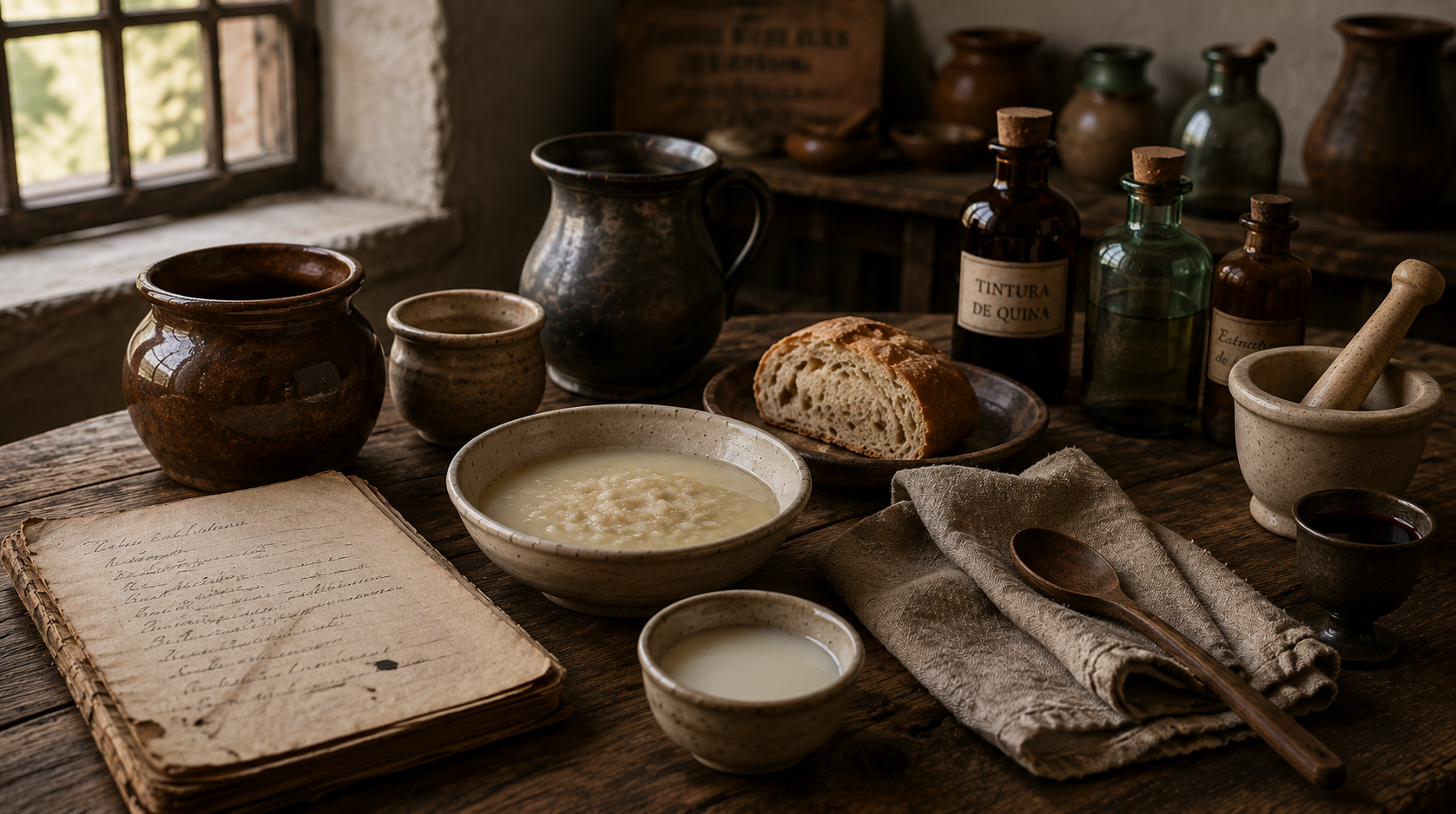
The Ordinary Diet Ration included fresh beef, chickpeas, hen, bacon, and sponge cake, also known as panetela. This ration was prepared into cups of nutriment and distributed throughout the day in carefully timed portions.
Rigorous Diet
The Rigorous Diet was one of the more controlled rations. It included beef, chickpeas, bacon, a portion of hen, and eggs, prepared into several cups of nutriment to be served at regular intervals.
This ration shows how structured hospital feeding could become when a patient required close medical attention.
Diet After Taking a Physic
Patients who had been given a physic received a ration or half ration of hen, depending on the physician or head surgeon’s order. They were also restricted from having any breakfast except a cup of broth, given two hours after taking the physic.
This entry clearly connects food timing and diet restrictions to medical treatment.
Wine Ration
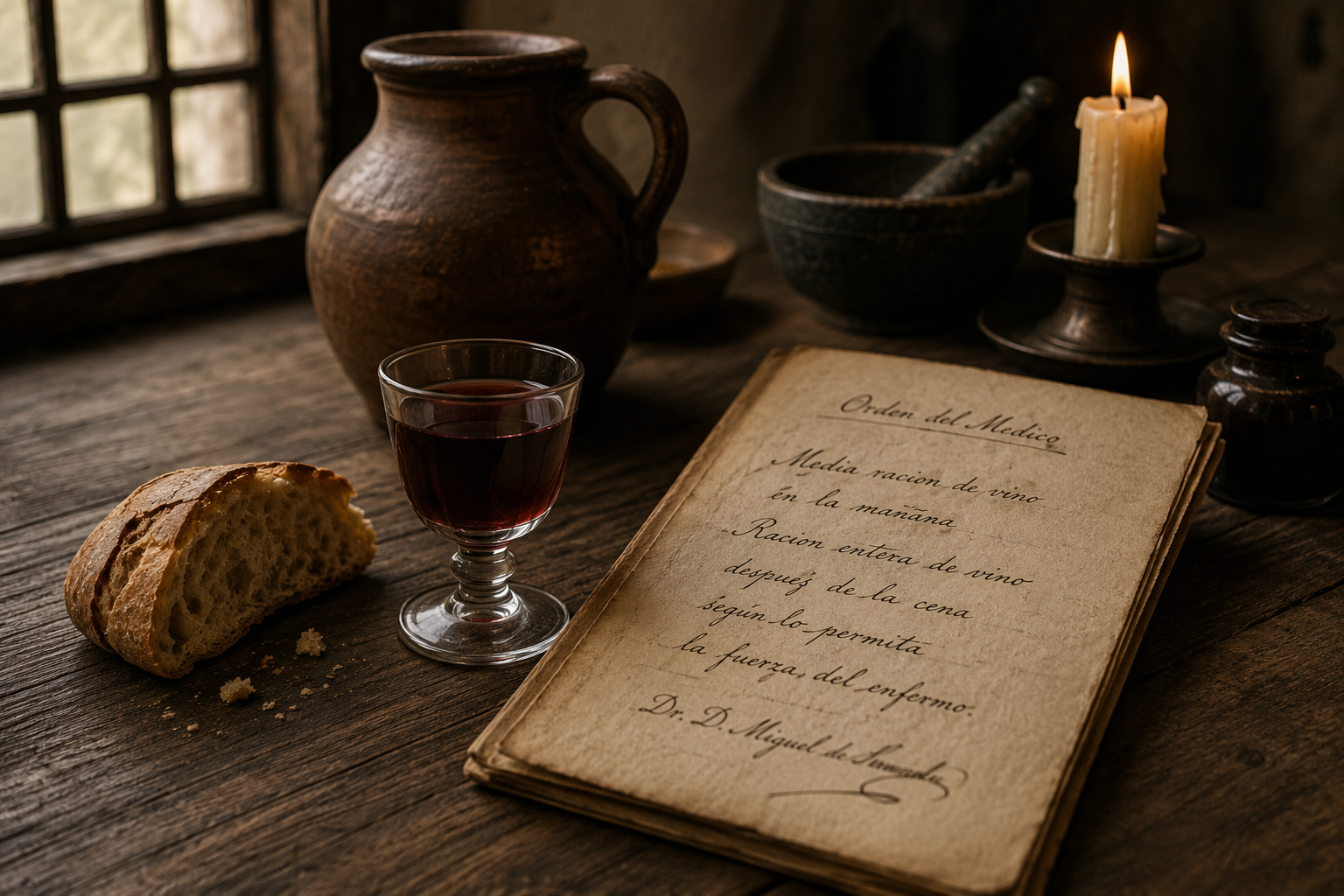
The Wine Ration was limited to twelve ounces, divided between dinner and supper. It could not be served without an express order from the physician or head surgeon.
Half Ration of Wine
The Half Ration of Wine reduced the amount to six ounces, with three ounces served at dinner and three at supper. Like the full wine ration, it required direct approval from the physician or head surgeon.
Milk Ration
The Milk Ration could be plain or double, depending on the amount prescribed. The regulations also mention that physicians or head surgeons could designate what was advisable for patients undergoing certain treatments when the mouth became irritated.
Ration of Wheat Flour Gruel
The Wheat Flour Gruel ration used flour, lard, and sugar. Portions were prepared for breakfast, dinner, and supper, creating a soft food that could be served throughout the day.
Ration of Rice Flour Gruel
The Rice Flour Gruel ration was especially connected to patients being treated with mercury. The regulations explain that rice flour gruel was considered soft, cooling, and nourishing for patients whose mouths had become sensitive or whose condition required gentler food.
Physician-Directed Changes
The regulations allowed physicians and surgeons to vary a patient’s food whenever urgency or necessity required it. This shows that while hospital diets were highly structured, they could still be adapted to individual medical needs.
Historical Note
Restricted diets reveal how carefully food was managed inside the Spanish Military Hospital. Meals were measured, timed, and sometimes withheld or modified based on treatment. In this setting, diet was part of the medical system itself.
Continue Exploring Hospital Diets
Learn more about the different foods and rations used in colonial hospital care.
Experience Colonial Medicine in St. Augustine
Visit the Spanish Military Hospital Museum to learn more about 18th-century medical practices, apothecary traditions, and daily hospital life in Spanish Colonial Florida.